
Massive orchestration for hyperscale data centers and AI factories
Coolbit AI unifies observability across high-density infrastructure and correlates millions of telemetry points on an architecture with Google Vertex AI to help teams manage alarms, analyze energy efficiency, and reduce PUE with more operational context.
PUE reduction depends on the facility’s conditions, data quality, and the defined optimization scope.
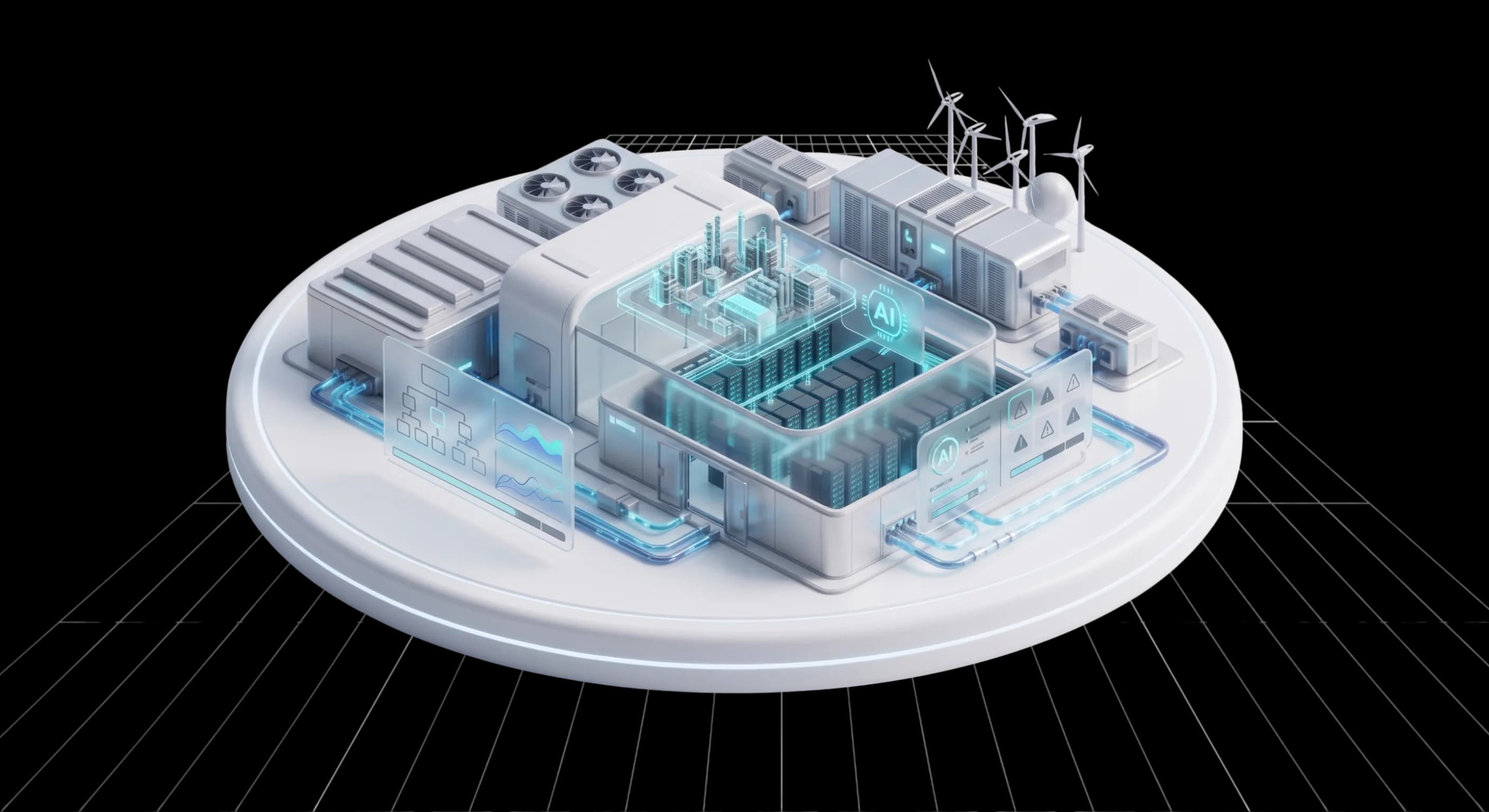
The new infrastructure design
AI infrastructure is rewriting the rules of the operation
The growth of artificial intelligence and accelerated-computing workloads is pushing thermal and electrical density to new limits.
Hyperscale campuses and AI Factories increasingly combine:
The physical architecture is changing. How it’s observed and operated must change too.
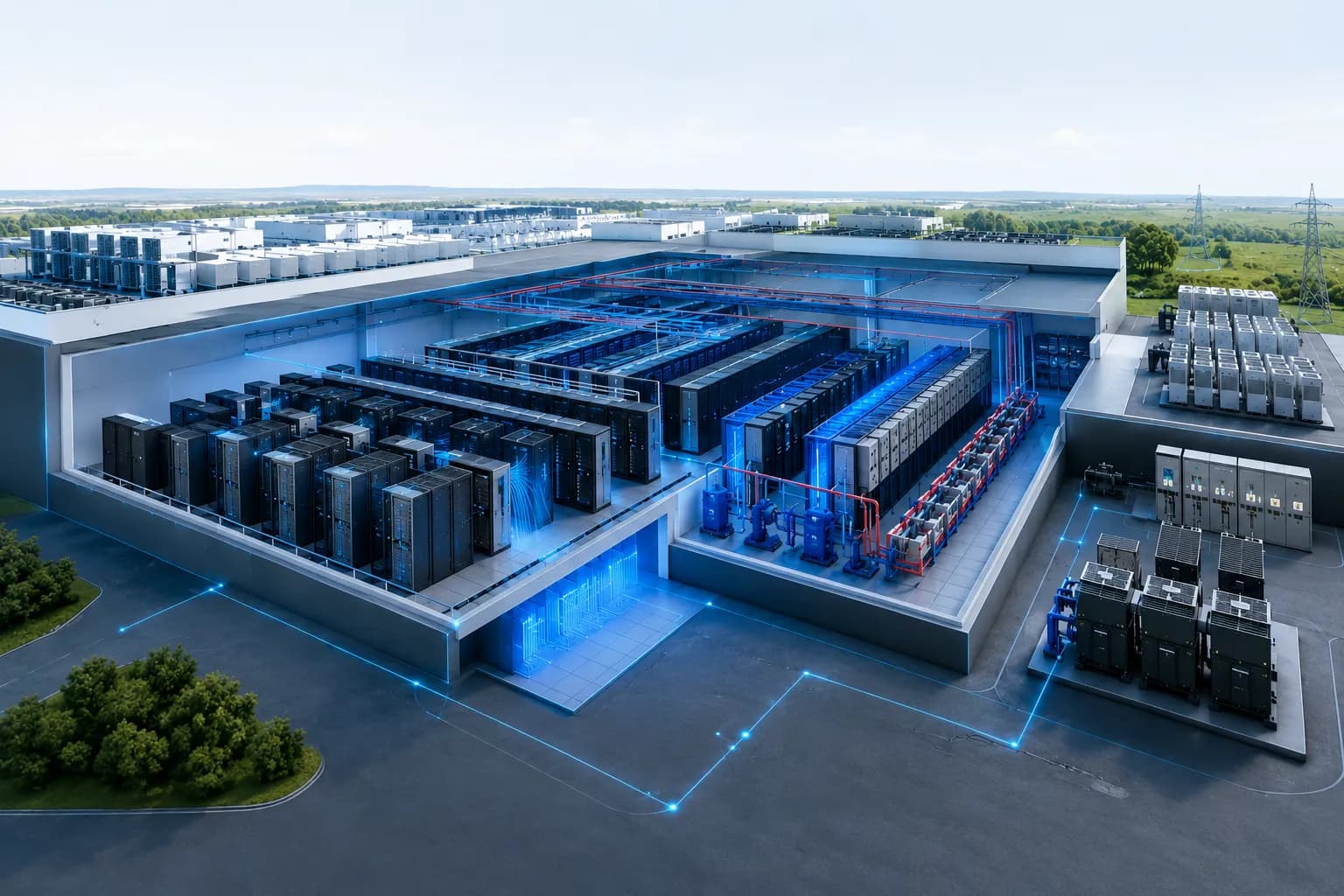
The cost of small deviations
At hyperscale, a minimal margin stops being small
A localized thermal or energy deviation can seem marginal at the asset level. When the same behavior repeats across racks, rooms, and systems, its impact amplifies. At campus scale, small inefficiencies can turn into:
To use a specific energy-overcost figure in public communication, it must be tied to a scenario, period, baseline, and verifiable source.
Hyperscale turns operational precision into an economic variable.
Unified observability
Unified observability for an operation that no longer fits in one domain
Coolbit AI brings together the available context across thermal, electrical, environmental, and operational systems so Critical Facilities, the NOC, and Infrastructure review the same situation from a shared read.
Final visibility depends on the hierarchy and sources brought into scope.
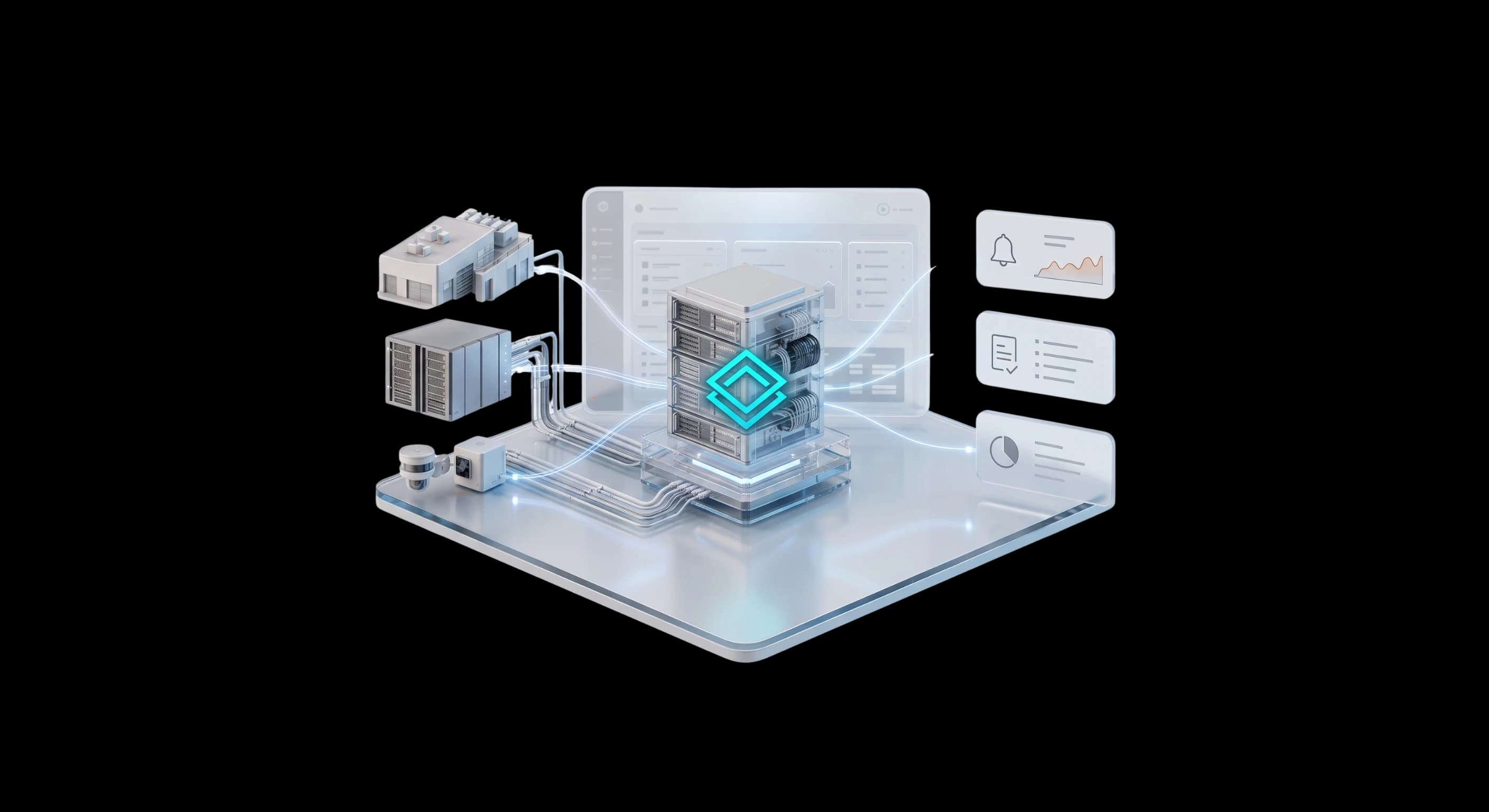
Unified observability helps answer
Intelligence architecture with Vertex AI
An architecture designed to orchestrate context at scale
Coolbit AI uses Google Vertex AI as the central orchestrator of its intelligence architecture. Its role is to coordinate processing and interpretation of large telemetry volumes to turn distributed signals into operational context.
Conceptual architecture
Vertex AI works as part of the intelligence architecture; it doesn’t replace the facility’s controls, permissions, and automation systems.
Millions of data points
Turn millions of signals into a shared operational read
As density increases, so does the volume of data generated by thermal, electrical, environmental, and IT infrastructure. Coolbit AI is designed to ingest and correlate millions of telemetry data points, preserving the context needed to review from campus scale down to the levels the data hierarchy allows. The goal isn’t showing more metrics. It’s helping find within that volume:
More data only creates value when it can be turned into context.
Thermal optimization and PUE
Turn energy efficiency into an operational variable
In high-density infrastructure, cooling and energy stop being just engineering metrics. They’re variables that affect capacity, cost, and sustainability. Coolbit AI correlates thermal, energy, and operational information to identify conditions that may be raising consumption or lowering the campus’s efficiency.
Objective
Use that context to detect optimization opportunities and contribute to reducing the facility’s PUE.
Important: No universal reduction percentage is published. The result must be measured against the baseline and each site’s conditions.
The review can include
Alarms at scale
Prioritize the event within millions of signals
In a hyperscale environment, a condition can appear across multiple sources and produce simultaneous events. Coolbit AI correlates alarms with the available context to help the team:
Priority stays under the organization’s criteria.
Explore alarm managementReporting and operational knowledge
From observability to actionable knowledge
Millions of telemetry points must end up as something Operations and Leadership can understand. Coolbit AI uses the accumulated context to prepare AI-assisted reports that help explain a period’s operation.
Operating procedures
SOPs, MOPs, and EOPs brought into scope can provide context during the event review.
The report helps explain
Integration and control
Operational orchestration doesn’t remove infrastructure governance
Coolbit AI can correlate, interpret, and recommend. An action on critical infrastructure requires an additional layer of control.
Observability and recommendation are part of the core message. Dynamic execution over cooling, power, or setpoints should only be published for integrations where that capability is validated.
Illustrative scenario
An AI Factory doesn’t need another screen. It needs context at scale.
A high-density campus simultaneously logs changes in temperature, power, and cooling behavior. Millions of telemetry points keep arriving from different systems.
Flow
Ingests the available telemetry.
Uses Vertex AI to orchestrate context analysis.
Correlates events within the period.
Identifies thermal and energy changes.
Relates alarms to the affected scope.
Compares behavior against historical data.
Evaluates PUE-related variables.
Consults procedures incorporated into the scenario.
Prepares an explanation and points for review.
The team decides the action per permissions and policies.
Result
Critical Facilities, the NOC, and Infrastructure can work from a shared read instead of interpreting millions of signals in isolation.
Architecture review
Evaluate Coolbit AI within your hyperscale architecture
The evaluation should start from a specific scenario.
Frequently asked questions
Questions about Coolbit AI for hyperscale
Yes. The confirmed architecture uses Google Vertex AI as part of Coolbit AI’s central intelligence orchestrator.
Yes. The hyperscale proposal covers ingesting and correlating millions of telemetry points to build operational context at scale.
Yes. Coolbit AI correlates thermal, energy, and operational information to identify optimization opportunities that can contribute to reducing PUE. The impact must be measured against the baseline and each facility’s conditions.
Liquid cooling is part of the hyperscale operation context. The ability to execute changes or control a specific system depends on the integrations, permissions, and functions validated for that deployment.
It means relating information from multiple domains within a shared context. The scope depends on the sources and hierarchies integrated.
The ability to coordinate reading and analyzing large volumes of telemetry, events, historical data, and operational knowledge within the same intelligence layer. It doesn’t imply that every action on the infrastructure is automatic.
It can correlate signals and provide context to speed up the investigation. A correlation shouldn’t automatically be presented as a confirmed cause.
No. Coolbit AI uses information from existing systems and adds an operational intelligence layer on top of them.
Operate the new AI infrastructure with context at scale
Correlate millions of telemetry points, unify your campus’s observability, and evaluate how Coolbit AI can help reduce PUE on an intelligence architecture powered by Google Vertex AI.