
Connect the data, the procedures, and the decisions in your data center
Coolbit AI relates operational telemetry and site knowledge to turn fragmented signals into context that helps your team prioritize alarms, look up procedures, and explain what happened.
Validate the alarm, SOP, and reporting flows before defining an integration.
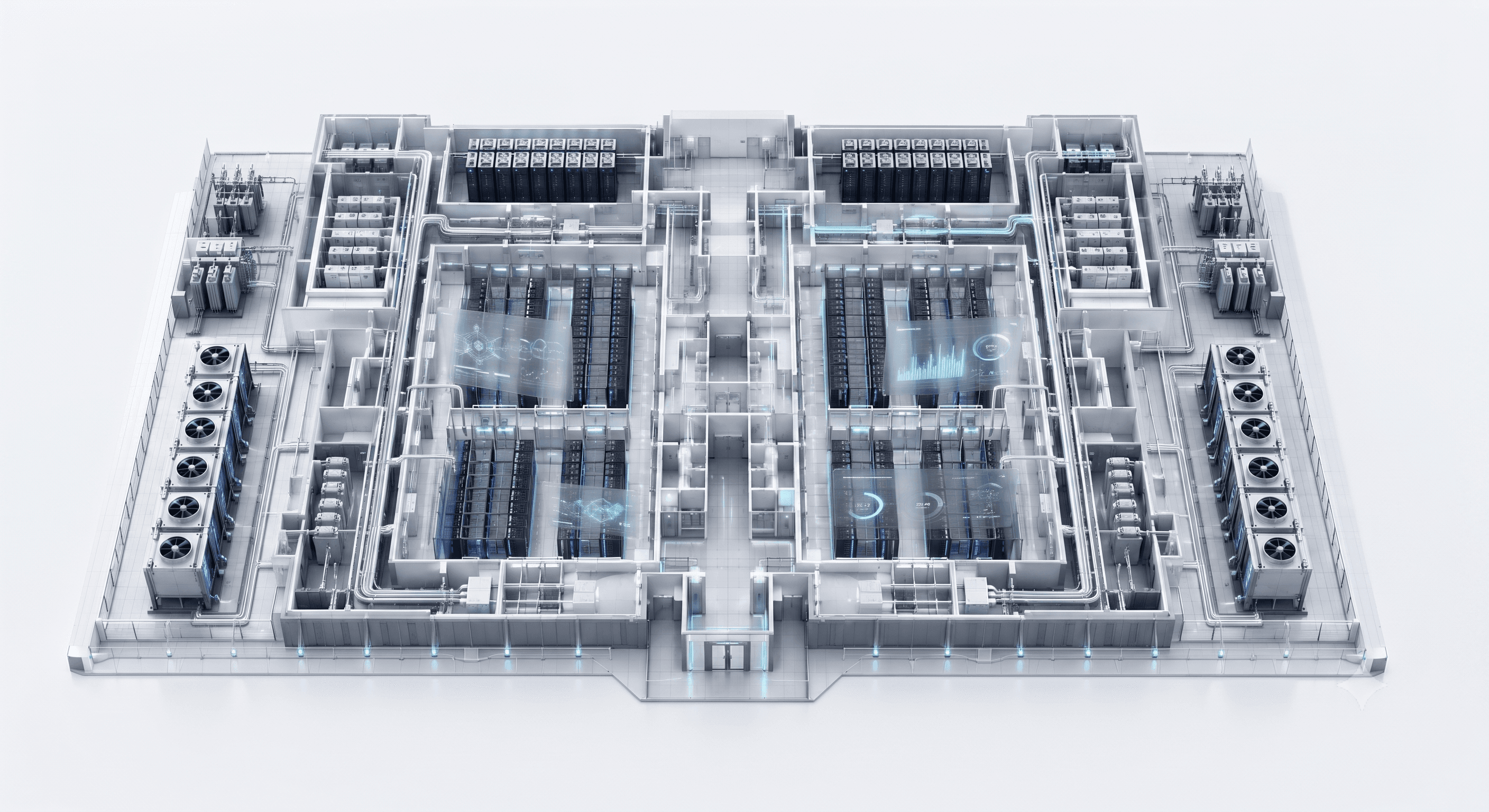
Thermal deviation in Room 2 · related SOP available
Illustrative view of the operational read. Values shown are examples.
Product definition
An intelligence layer for critical infrastructure operations
Coolbit AI is an operational intelligence platform for data centers and critical infrastructure.
It relates the operation’s available information with historical data and site knowledge to help the team:
It isn’t positioned as a universal replacement for BMS or DCIM. Its value appears in the relationship between the information those systems produce and the workflows the team needs to run.
See how this plays out in the use cases ↓
The limit of fragmented monitoring
The problem is no longer getting data. It’s turning it into context.
Data centers continuously generate environmental, thermal, electrical, and operational information. BMS, DCIM, sensors, alarms, historical data, and procedures all contribute important pieces, but they don’t always tell a shared story of what’s happening.
When a deviation appears, the team still has to relate signals, review dashboards, locate procedures, and manually reconstruct the story before deciding what needs attention.
More monitoring alone doesn’t remove the gap between observing a facility and understanding what to do with the information.
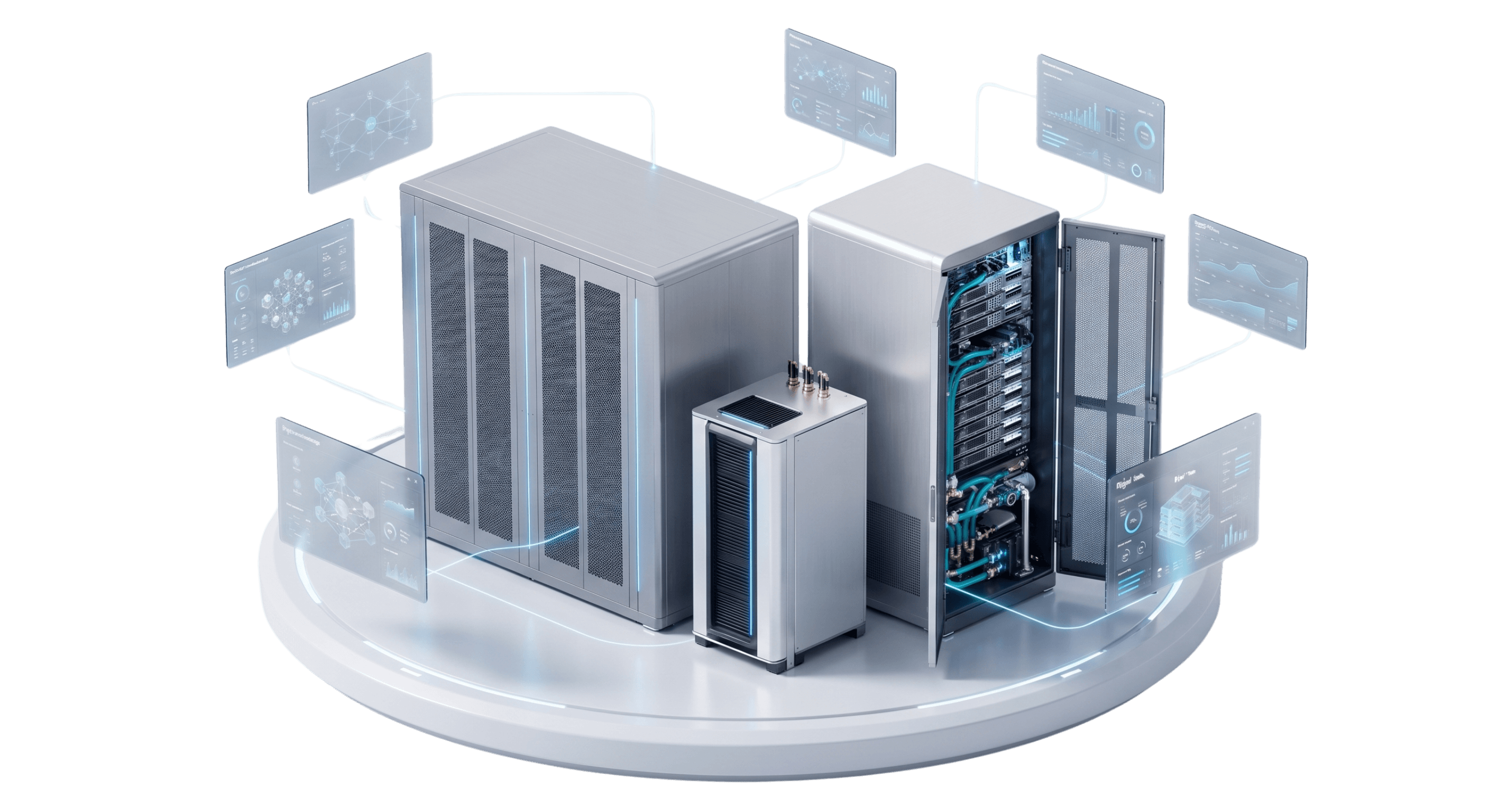 BMSDCIMSensorsAlarmsSOPs & MOPsHistorical dataMeters
No shared context · the operator reconstructs the relationship manually
Differentiator
From fragmented monitoring to context-aware operations
Coolbit AI connects three elements that are normally consulted separately.
Operational telemetry
Data, alarms, and historical records from the sources brought into scope.
Site knowledge
Procedures and operational context that help interpret a situation.
Operational intelligence
A layer that relates available information to help prioritize, explain, and report.
The result
A more contextual read of the operation
It plays out in alarms, procedures, and reports. Available sources, interfaces, and functions are validated for each implementation.
Use cases
Three moments where context changes the operation
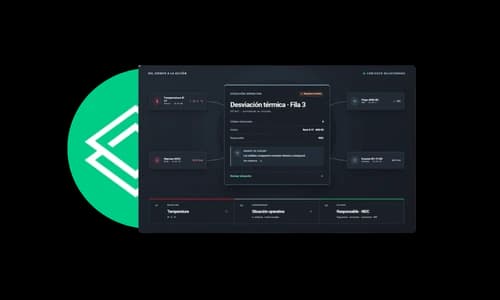
When too many alarms come in
Scalable alarm management
Relates available signals and events to help the team identify what needs attention within the operational context.
Smart alarm management →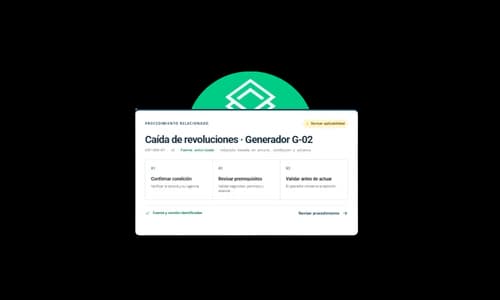
When you need to know which procedure applies
Operating procedures and SOPs
Connects a situation or query with the available operational knowledge to make it easier to reach and review the related procedure.
AI-assisted operating procedures →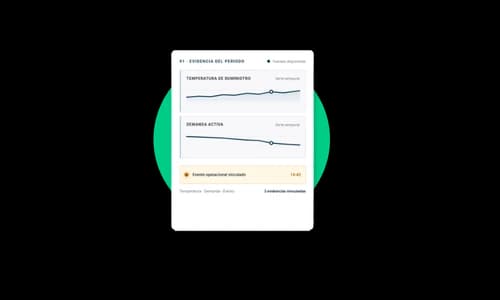
When you need to explain what happened
AI-assisted advanced reporting
Organizes data from a period, historical records, and available context to prepare reports that help understand what changed and what’s worth reviewing.
AI-assisted advanced reporting →Operational outcome
What changes when context reaches the workflow
From reviewing isolated signals to reviewing a situation
Events can be presented together with related information to make the operator’s review easier.
From a separate document to the procedure inside the context
Operational knowledge can be looked up when the situation calls for it, instead of relying only on manual searches.
From a CSV to an explanation of the period
Available data and context can be organized into an assisted report for review.
From an isolated response to a clearer operational story
Alarms, procedures, and reports become related parts of the same operation.
Industry solutions
The same operational intelligence, different priorities
Operations change with scale, density, distribution, and the relationship with the client. That’s why Coolbit AI’s fit must be evaluated within the context of each infrastructure.
Data Center Colocation
A multi-tenant context where alarms, reports, and operational evidence must be reviewed around clients, zones, and service commitments.
Explore Data Center Colocation →Hyperscale Data Center
Large-scale, high-density infrastructure where multiple signals and systems increase the need for a shared operational read.
Explore Hyperscale Data Center →Edge Data Center
Distributed sites with little local presence, where the NOC needs context to review alarms, procedures, and field support.
Explore Edge Data Center →Existing ecosystem
Add intelligence to the information already in your operation
Coolbit AI’s premise starts from an important idea: the infrastructure already has systems, telemetry, and operational knowledge.
Coolbit AI is evaluated as a layer that uses the available sources to relate that information to the team’s use cases.
Universal compatibility is not assumed. Each source, protocol, and deployment mode must be technically validated.
The architecture review should confirm
Demo
See the proposal in an operational flow
The best way to understand Coolbit AI isn’t reviewing another feature list. It’s seeing how the platform uses data and context within a recognizable task.
Select the use case you want to review before defining a pilot or an integration.
Choose the flow you want to review first
You’ll see how signals and events are related to identify what needs attention within the operational context.
Implementation and control
Operational evolution starts with understanding your architecture
Every data center has different sources, processes, security policies, and instrumentation levels. That’s why adoption should start with:
Define the problem
Select the use case and the outcome that needs to be validated.
Review the sources
Identify relevant data, historical records, procedures, and systems.
Validate the scope
Review interfaces, permissions, security, and technical conditions.
Test before scaling
Use a representative scenario to evaluate the flow.
FAQ
Questions before evaluating Coolbit AI
No. It is positioned as an intelligence layer that uses information from the available sources to bring context to the operation.
It depends on the use case. The evaluation can consider telemetry, alarms, historical data, procedures, and other relevant sources within the approved scope.
The baseline content proposes an architecture oriented to different sources, but compatibility must be confirmed per system, interface, version, and scope.
Coolbit AI can help relate signals and present context. Priority and response criteria must stay aligned with the organization’s rules.
The operating procedures use case covers the relationship between a situation and available procedures. Onboarding, updates, permissions, and document governance must be validated.
The reporting use case covers organizing data and context from a period to generate an assisted report. Available sources, formats, and functions must be confirmed.
The architecture review defines the sources, interfaces, security, permissions, and requirements needed for the scenario.
It should not be presented as a general capability or outcome without specific models, baselines, methodology, and evidence. The site may reference trend analysis and available variables where applicable.
Start with the technical demo and, if the scenario is relevant, continue with an architecture review.