Transparency and capacity maximization for multi-tenant operations
Coolbit AI connects alarms, power, capacity, and operational evidence to help colocation teams protect the SLA, identify stranded capacity, make better use of existing infrastructure, and reduce the need for new CAPEX expansions.
From cabinet-level 3D analysis to per-client segregated access, the evaluation starts from the architecture and real data of each site.
The multi-tenant model
Every client shares infrastructure, but needs its own transparency
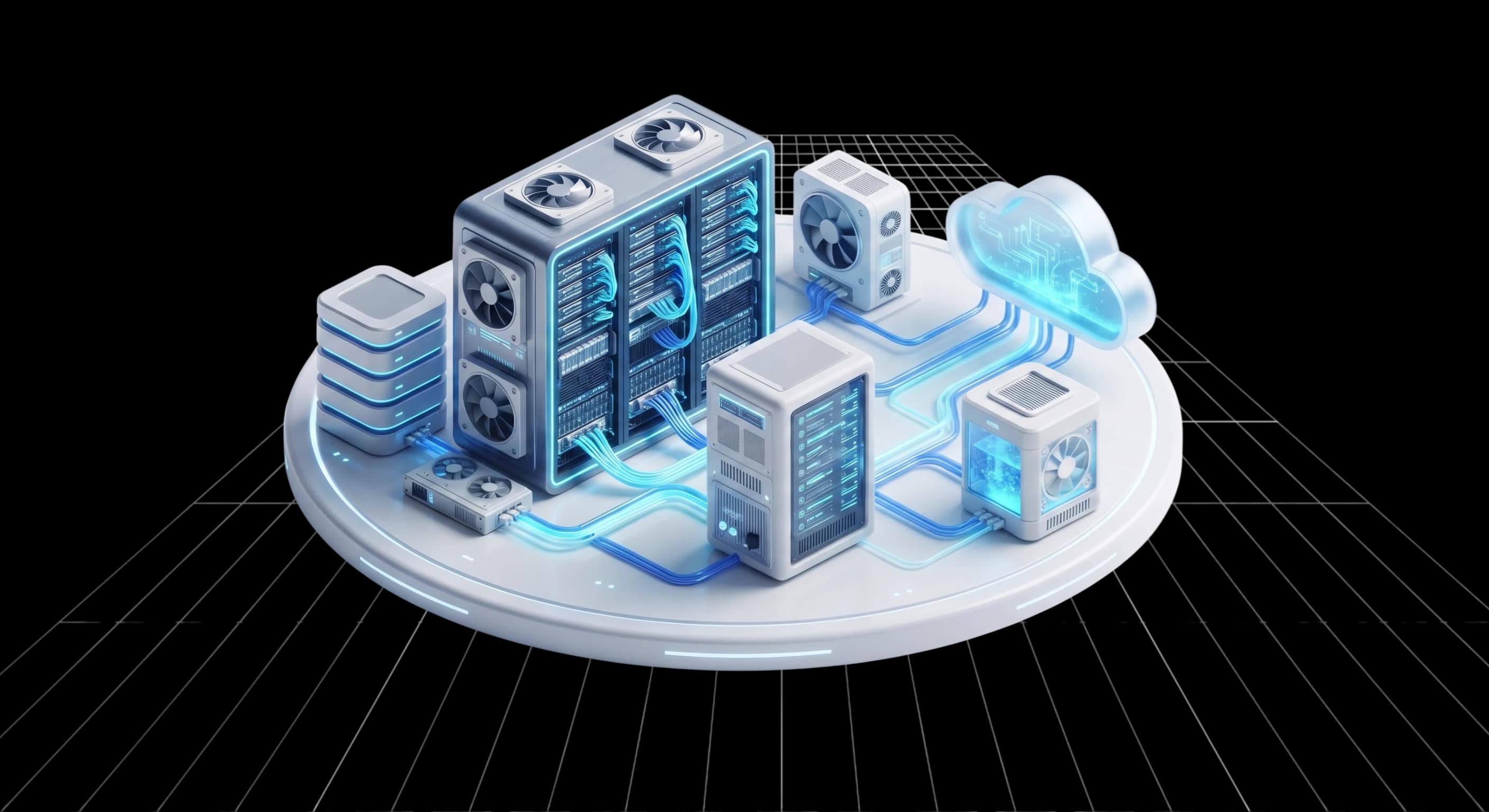
In a colocation data center, power, cooling, and space are shared while service commitments, consumption, and access are managed per client.
Coolbit AI brings that context together so Operations, Service Delivery, and Commercial Operations work from a shared read of the infrastructure.
A multi-tenant operation needs a shared view for the operator and a delimited context for each client.
That requires relating
SLA and evidence
From the incident to service evidence
An isolated alarm doesn’t explain an SLA. The review requires reconstructing what happened, when it happened, which assets were involved, and how the operation responded. Coolbit AI relates:
The result is an evidence base Operations and Service Delivery can use to review the event against the applicable metrics and contractual conditions.
Operational transparency
What happened and where.
Traceability
How the incident evolved.
Client context
Which multi-tenant scope was involved.
Structured evidence
What information can be used in an SLA report.
Immutable log
Every incident keeps a chain of evidence
Coolbit AI uses an immutable log to preserve the sequence of events and interventions associated with an incident. The log can gather:
The alarm stops being an isolated record and becomes a verifiable service story.
Energy per client
Understand how consumption is distributed within the multi-tenant operation
When instrumentation and the data model relate measurements to clients, zones, or assets, Coolbit AI incorporates that information into the operational context.
From telemetry to a commercial read
Energy can be analyzed together with capacity, cooling, and operational behavior to better understand how the infrastructure is used.
Note: Using energy data for billing depends on the precision, instrumentation, and methodology approved by the operator.
This lets you review
3D analysis
Visualize thermal and electrical capacity at the cabinet level
Coolbit AI incorporates cabinet-level three-dimensional analysis to relate thermal and power load profiles with the white space’s physical layout.
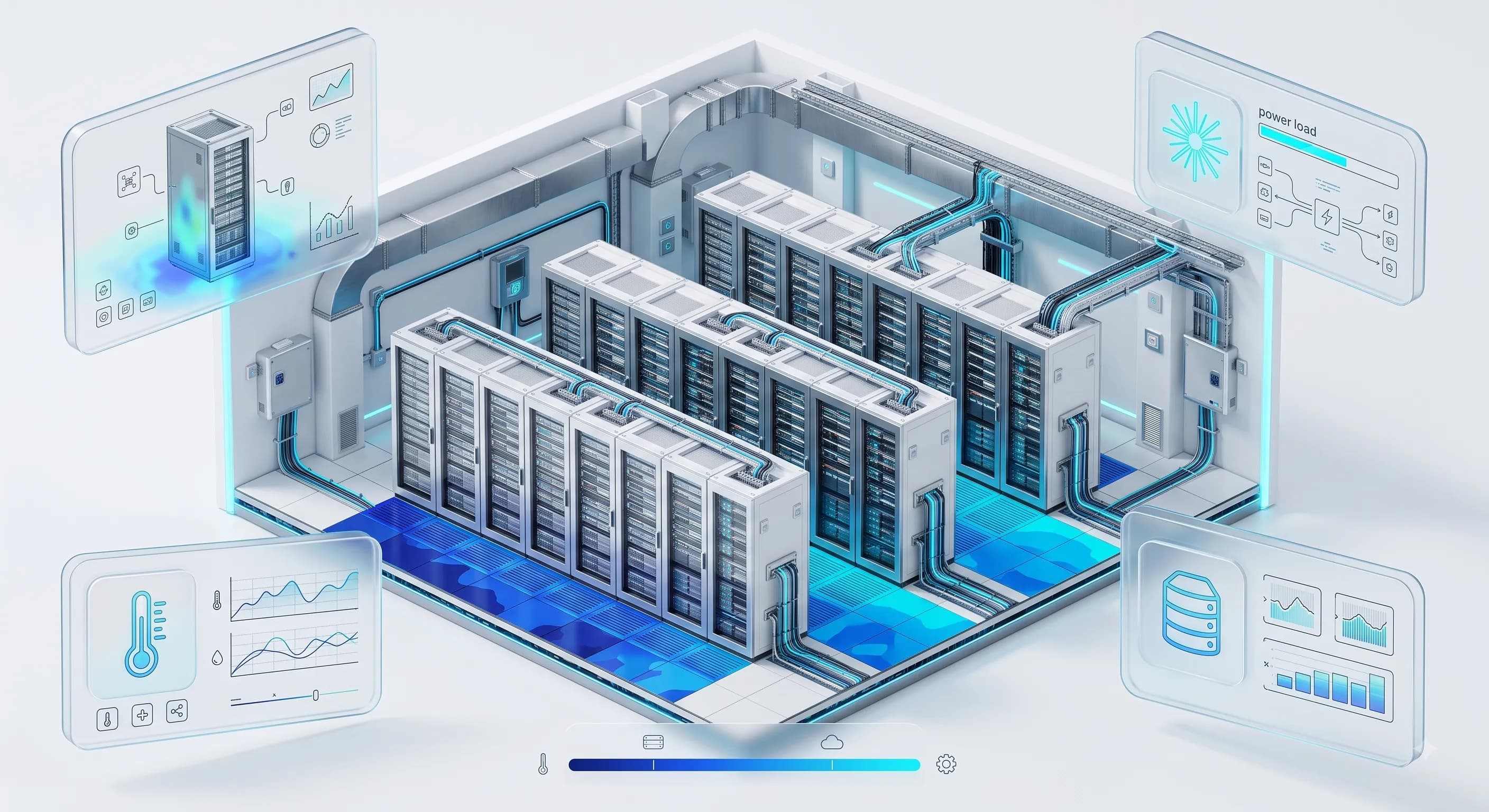
The 3D view lets you review
From an isolated metric to a spatial decision
Stranded capacity
Discover stranded capacity before deciding where to expand
In colocation, having physical space doesn’t necessarily mean having usable capacity.
A zone can be limited by:
Coolbit AI relates 3D analysis, thermal telemetry, power, and operational behavior to identify stranded capacity: installed capacity whose use is limited or not evident through a fragmented read.
The flow
Making stranded capacity visible lets you evaluate existing infrastructure first before deciding on an expansion.
CAPEX savings
Make better use of existing infrastructure before investing in more capacity
Expanding power or cooling means CAPEX. When part of the already-installed capacity remains underused or limited by a condition that can be resolved, expanding infrastructure shouldn’t always be the first step. Coolbit AI helps identify:
Coolbit AI helps generate CAPEX savings by making visible installed capacity that can be used before new electrical or cooling infrastructure expansions.
The specific savings depend on the project, the capacity identified, and the operator’s engineering decisions.
Multi-tenant alarm management
Understand the incident’s impact before communicating it to the client
A failure in shared infrastructure can produce multiple alarms and affect different zones or clients.
This lets Operations handle the incident while Service Delivery prepares an explanation based on the same evidence.
Explore alarm management →Coolbit AI uses the operational context to
RBAC and regulatory privacy
A shared context for Operations. A delimited access for each client.
Coolbit AI incorporates Role-Based Access Control (RBAC) to segment information within a multi-tenant architecture. Permissions can delimit access by:
Per-client access
Each client can view exclusively the telemetry, events, and information authorized for their own scope.
Guaranteed regulatory privacy
Segregation via RBAC and multi-tenant context separation let Coolbit AI guarantee the regulatory privacy required in sensitive operations, including financial and healthcare sectors.
Sharing transparency doesn’t mean sharing data that belongs to another tenant.
Service Delivery and Commercial Operations
Turn the operation into information for the client and for the business
The same telemetry has different readers.
Operations needs
Service Delivery needs
Commercial Operations needs
Illustrative scenario
From a thermal alarm to a service and capacity decision
Detection
A zone associated with a client logs a thermal deviation.
Correlation
Coolbit AI relates the alarms and the context of the involved assets.
Diagnosis
The platform identifies the root cause and keeps the sequence within the immutable log.
Multi-tenant scope
RBAC delimits which information belongs to the client and which remains available only to Operations.
3D analysis
The cabinet-level view shows the zone’s thermal condition and power load.
Capacity
Coolbit AI identifies whether the condition is limiting existing capacity or whether margin is available in another zone.
Response
The operator consults the procedure and manages the incident.
Report
Service Delivery receives an evidence structure to review the SLA.
Infrastructure decision
Commercial Operations and Engineering can review whether stranded capacity exists to absorb new load before an expansion.
Result · a single incident generates context for
Evaluation
Evaluate how much context and capacity you can get from your current operation
Coolbit AI’s evaluation for colocation starts with the real architecture.
Frequently asked questions
Questions about Coolbit AI for Data Center Colocation
Yes. Coolbit AI incorporates cabinet-level 3D analysis to relate thermal load, power, and physical distribution.
Yes. The platform relates thermal, electrical, historical, and spatial data to identify installed capacity whose use is limited or not evident.
Yes. By making visible existing capacity that can be used before expanding power or cooling, Coolbit AI can create CAPEX savings opportunities. The specific economic value depends on the facility and the project.
Yes. Coolbit AI uses RBAC to delimit access by client, role, site, zone, cabinet, or asset.
The multi-tenant architecture segments context and access via RBAC so each client sees only authorized information.
Yes. Data segmentation and per-client access control are designed to guarantee the regulatory privacy required in sensitive operations, including financial and healthcare sectors.
Yes. Alarms, times, interventions, procedures, and the immutable log can be used to prepare operational evidence. The final contractual determination follows the SLA’s rules.
Yes. The chain of events and interventions can be preserved in an immutable log for audit and later analysis.
Yes, when instrumentation and the data model allow associating the measurement with the corresponding tenant, zone, or asset.
No. Coolbit AI uses and correlates information from the incorporated systems and adds an operational intelligence layer on top of them.
Turn capacity, energy, and evidence into an advantage for your colocation operation
Use Coolbit AI to give each client transparency, analyze cabinet-level capacity, identify stranded capacity, protect multi-tenant privacy, and make better use of existing infrastructure before expanding CAPEX.